
Austria in 2026:
What Is Changing and Why It Matters
2026 brings an unusually high number of changes that affect everyday life in Austria. Many involve rules, fees and thresholds that have remained untouched for years and, in some cases, for decades.
Driven by cost pressure, system reform and long-planned measures finally reaching implementation, tighter public budgets are leading to frozen benefits, higher individual contributions and increased administrative and local fees. At the same time, authorities are pushing for systems to operate in a more standardised and digital way – from immigration processing and pensions to healthcare and transport.
Some changes are substantial, others relatively small but widely felt. Together, they affect how people rent, commute, work, retire, raise children and move around Austria in 2026. This overview focuses on the changes most likely to shape daily life for residents and those considering a move to Austria.
Jump to the sections most relevant to you:
 Immigration and Integration
Income Thresholds
From January 2026, Austria increases minimum income and “proof of funds” thresholds for residence permits, based on updated social insurance reference values. This affects key workers, EU Blue Card holders and non-working residence permits.
As thresholds rise, applicants whose income is close to the minimum face a higher risk of falling short in 2026, particularly if income fluctuates or if dependants are included in the application.
Minimum gross salary thresholds for selected work permits, 2025 vs 2026
Source note: Salary thresholds vary by permit category and are published on the official Austrian government portal (migration.gv.at). Figures shown here should be checked against the relevant permit page when preparing an application.
*Note: Monthly figures are typically calculated based on 14 payments per year, a standard practice in Austrian employment law. EU Blue Card salary is officially set as an annual figure because it is based on EU Law.
Other Financial Threshold Changes
Amounts shown are monthly minimums and are adjusted annually based on statutory reference values.
Beyond salary thresholds, eligibility has also widened. The Austria-wide Shortage Occupation List has expands to 64 professions in 2026, now including roles, such as locomotive drivers, payroll specialists and inclusive early-childhood educators.
Red-White-Red Card
In 2026, Red-White-Red Card applications is set to move to a parallel, fully digital processing model. Immigration authorities and the AMS assess applications simultaneously using machine-readable documents, with a statutory eight-week decision target for complete applications.
If documents are missing or invalid, the decision clock pauses. Further automation – including direct links to social insurance databases – is planned for later in 2026 but is not yet in effect.
Family Reunification (Asylum Route)
A new legal mechanism allows the federal government to temporarily pause processing of asylum-related family reunification applications. The current framework runs until the end of September 2026.
Applications may still be submitted, but statutory decision deadlines can be suspended, subject to limited human-rights exceptions.
Integration Duties
Mandatory values and orientation courses increase from three to five days from January 2026. Participants must also sign a formal integration declaration, with sanctions linked to non-participation within the wider integration framework.
 Work and Income
Several labour-market changes take effect in 2026. These focus on tighter rules around unemployment benefits, clearer reporting of working conditions and expanded transparency rights for employees and freelancers.
Declaring Agreed Working Hours
From 1st January 2026, employers must specify agreed weekly working hours when registering new employees with Austria’s social insurance system (ELDA). This applies to both full-time and part-time contracts.
The aim is to improve transparency and make under-reported hours easier to detect. For employees, it creates a clearer official record of what was contractually agreed at the start of employment.
Marginal Work While Unemployed (Mini-Jobs)
The marginal earnings threshold (Geringfügigkeitsgrenze) remains unchanged at €551.10 per month for 2026. However, the rules around combining marginal employment with unemployment benefits change significantly.
From 1st January 2026, people receiving Arbeitslosengeld (unemployment benefits) or Notstandshilfe (emergency assistance) may generally no longer hold a marginal job alongside benefits. Existing side jobs must be terminated by 31st January 2026 to avoid retroactive loss of benefits.
Limited exceptions apply, mainly for people unemployed for over 365 days who are either over 50 or have a recognised disability of at least 50%.
Pay Transparency and Recruitment Rules
EU pay transparency rules must be implemented by 7th June 2026. Austria is expected to update national law accordingly, which will affect how jobs are advertised and how salaries are discussed during recruitment.
- Employers must disclose a starting salary or pay range in the job advertisement or before the first interview.
- Employers may no longer ask candidates about their current or previous pay.
- Contract clauses prohibiting employees from discussing pay become invalid.
- Employees gain the right to request information about average pay levels for comparable roles, broken down by gender.
Expanded Rights for Freelancers and Platform Workers
From the start of 2026, Austrian civil law strengthens protections for so-called “employee-like” freelancers, including many platform workers.
New contracts must include minimum notice periods of four weeks (increasing to 6 weeks after two years of service). Termination dates are restricted to mid-month or month-end, and these rights cannot be waived by contract.
For the first time, this group may also be covered by Kollektivverträge (collective agreements), opening the door to negotiated minimum pay and supplements.
Separately, EU platform work rules take effect from 2nd December 2026. Where platforms control pay, performance monitoring or task allocation, workers are presumed to be employees rather than freelancers. Platforms must also explain how algorithms affect work and ensure that major decisions, such as account suspensions, involve human review.
Note: These rules do not automatically apply to existing contracts signed before 2026 unless they are renewed or amended.
Commuting Support: Pendler-Euro Triples
From 1st January 2026, the Pendler-Euro triples from €2 to €6 per kilometre per year, calculated on the straight-line distance between home and workplace.
This is a direct tax credit, not a deduction, and applies to anyone eligible for the Pendlerpauschale (commuter lump sum). The maximum refundable amount for low-income earners rises accordingly, with the commuter-related Negativsteuer (social security refund) rising to €1,423 for 2026.
The amount is pro-rated for part-time work and requires submission of a Pendlerrechner printout to the employer.
Vienna-specific payroll deduction: Wohnbauförderungsbeitrag
Vienna increases the Wohnbauförderungsbeitrag (housing subsidy contribution) in 2026 from 1.0% to 1.5% of gross income.
For most employees above the marginal income threshold, the contribution continues to be split evenly between employer and employee. Each side now pays 0.75%, up from 0.5%. The increase forms part of Vienna’s broader budget consolidation and directly affects monthly net pay for people working in the city.
 Housing and Renting
Austria’s long-discussed rental reform takes effect from 1st January 2026 (although the rent increase caps apply from April 2026 and April 2027). It changes how fixed-term contracts are structured, how leases renew if no action is taken, and how much rents may rise over the next two years. The measures affect a large share of the regulated rental market.
Fixed-Term Contracts Become Longer
Until now, most fixed-term residential leases could not be agreed for less than three years. From 2026, the minimum duration rises to five years. This applies both to new contracts and to extensions of existing fixed-term leases.
An exception remains for landlords who are not considered entrepreneurs under the Konsumentenschutzgesetz (KSchG). This category is intended to cover small private landlords rather than professional operators. Explanatory notes suggest this generally means no more than five rental units and no ongoing business structures, although some borderline cases may remain legally unclear.
In practice, tenant organisations expect five-year contracts to become standard, particularly in cities such as Vienna, Graz and Linz. Three-year leases are likely to become the exception rather than the norm.
Silent Extensions Now Last Five Years
The reform also affects stillschweigende Verlängerung (tacit extension), where a tenant remains in the property after a fixed term ends without signing a new written agreement. The first automatic renewal period also increases from three years to five years.
As Austrian law requires fixed-term contracts to be explicitly in writing, informal emails or verbal statements about duration usually do not create a valid new fixed-term. If neither side formally renews or terminates the lease, the law may impose a 5-year extension by default.
Rent Increases Capped in 2026 and 2027
Parliament has approved temporary limits on rent increases to ease inflation pressure. For regulated rents under the Mietrechtsgesetz (MRG), including many Altbau flats and municipal housing, increases are capped at 1% from 1st April 2026, and 2% from 1st April 2027.
In the partial-application area of the MRG, the new Mietwertsicherungsgesetz (MieWeG) moderates how inflation is passed on. Inflation up to 3% may be applied in full; above that level, only half of the excess may be charged. An inflation rate of 5% would therefore translate into a 4% rent increase.
Fully free-market rents are not subject to the strict 1-2% caps, but similar moderation rules apply under the new framework.
Legal Certainty Around Rent Indexation
A major update to Austrian rental law addresses rent indexation clauses (Wertsicherungsklauseln), which allow landlords to raise rent based on inflation. Following 2023 Supreme Court rulings that found many of these clauses legally invalid, there was a risk that landlords would have to refund decades of past rent increases.
2025 legislation provided clarified how they apply going forward and limited retrospective repayment claims to a maximum of five years. This reform aims to protect tenants from excessive hikes while preventing a wave of lawsuits from destabilising the rental market.
Vienna: Housing Subsidy Contribution Increases
Vienna increases the Wohnbauförderungsbeitrag (housing subsidy contribution) from 1.0% to 1.5% of gross income in 2026.
For most employees above the marginal income threshold, the contribution continues to be split evenly between employer and employee. Each side now pays 0.75%, up from 0.5% previously. This change forms part of Vienna’s broader budget consolidation and affects monthly net income for people working in the city.
 Healthcare
In 2026, Austria introduces several healthcare changes affecting access to care, digital systems and out-of-pocket costs. Some measures modernise how care is delivered, while others shift costs between patients, employees and pensioners.
Digital Access and Primary Care Rollout
- Austria plans a nationwide rollout of the 1450 health hotline to offer direct bookings for medical appointments, reducing the need to call individual practices.
- Private elective doctors (Wahlärzte), as well as public doctors, are required to use the electronic health record (ELGA) and e-Card system. Patients therefore have a more complete digital medical history, accessible via the ELGA app (unless the patient has opted out).
- An expansion of multidisciplinary Primary Care Units (Primärversorgungseinheiten, PVE) is underway. These centres bring together GPs, nurses and other specialists, often with longer opening hours and a focus on local access.
- To reduce shortages, Austria is expanding stockpiling requirements for around 700 critical medicines to cover roughly four months of national need – primarily through obligations on the pharmaceutical industry.
Medication Costs and Spending Caps
The standard prescription fee (Rezeptgebühr) remains frozen at the 2025 level of €7.55.
What changes is how the annual medication spending cap is calculated. From 2026, medicines costing less than €7.55 also count towards the cap. Previously, these lower-priced medicines were excluded.
As a result, people who rely on multiple prescriptions – including lower-cost medications – may reach their personal exemption threshold earlier than before.
Fees and Co-Payments
Several patient contributions increase in 2026.
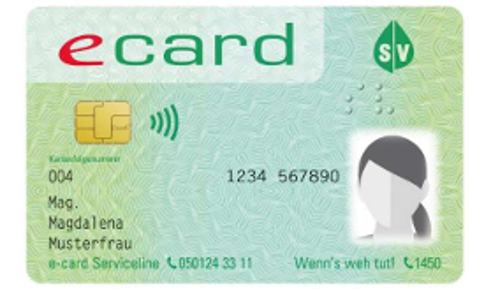
The annual e-Card service fee rises to €25.00, up from €14.65. This amount was deducted from employees' salaries in late 2025 for the 2026 coverage year.
Minimum co-payments for medical aids (Heilbehelfe) also rise. The minimum personal contribution increases to €46.20. For adult eyeglasses, the minimum contribution rises to €138.60.
For people who voluntarily self-insure in the statutory health system (ÖGK), the monthly flat rate is €565.25 in 2026, up from €526.79 in 2025.
VAT Exemptions for Health Products
Feminine hygiene products and contraceptives are exempt from VAT from 2026.
Changes for Pensioners
Most pensioners have paid a 6.0% health insurance deduction since June 2025. For pensioners receiving compensatory allowance (Ausgleichszulage), the rate increases from 5.1% to 6.0% on 1st January 2026.
In addition, most pensioners lose their exemption from the e-Card service fee. The first fee will be deducted in November 2026, covering the 2027 insurance year.
 Pensions and Retirement
In 2026, several changes affect how pensions are adjusted, when people can retire and how flexible the transition into retirement can be.
Pension Adjustments in 2026
Pensions are adjusted on 1st January 2026 using a staggered formula designed to protect lower pensions while limiting overall costs.
Pensions of up to €2,500 gross per month increased by 2.7%. Amounts above €2,500 received a flat-rate increase of €67.50.
A further change affects people retiring in 2026. In the first year of retirement, the pension adjustment is set at 50% of the standard increase, regardless of the month in which retirement begins. This reduces the automatic inflation adjustment for new retirees.
Retirement Age for Women Continues to Rise
The equalisation of retirement ages remains one of the most consequential changes for female residents.
For women born between 1st January and 30th June 1965, the statutory retirement age reaches 61.5 years in 2026. This age will continue to rise by six months each year until it reaches 65 in 2033.
For men, the statutory retirement age remains unchanged at 65.
Early Retirement Becomes Harder
Access to early retirement through the corridor pension (Korridorpension) tightens further in 2026.
The minimum age rises from 62 towards 63 and the required contribution period increases from 40 to 42 insurance years. These changes narrow eligibility and delay access for many people who had planned to retire earlier.
At present, this model mainly affects men, as most women still reach standard retirement age before meeting corridor pension thresholds.
New Partial Pension (Teilpension)
From 1st January 2026, Austria introduces a new partial pension model, allowing a gradual transition into retirement.
People who already qualify for a pension can reduce their working hours and receive part of their pension at the same time. The pension paid depends on how much working time is reduced.
- 25-40% reduction: 25% of the pension;
- 41-60% reduction: 50% of the pension;
- 61-75% reduction: 75% of the pension.
 Families and Children
In 2026, changes affecting families span financial support, healthcare-linked payments, schooling and higher education.
At a Glance
|
Family Benefits Remain Frozen
Family allowance (Familienbeihilfe), childcare allowance (Kinderbetreuungsgeld) and the child tax credit (Kinderabsetzbetrag) remain unchanged at their 2025 levels for both 2026 and 2027. As these payments do not adjust for inflation during this period, families will experience a real-terms loss in value.
Parent-Child Pass Goes Digital
From 1st October, the Eltern-Kind-Pass (formerly Mutter-Kind-Pass) becomes fully digital. All required medical examinations will be recorded electronically, replacing the paper booklet.
The digital system strengthens the link between completed check-ups and eligibility for certain child-related payments. Some child-related payments are linked to completing required check-ups. A digital system makes these links easier to track.
The updated programme also expands early health consultations, adds new newborn screenings and introduces structured parental guidance.
Schools: Language Support, Staffing and New Rules
Pupils identified as needing German-language support will be required to attend summer school from 2026.
For the 2026/2027 school year, around 400 priority primary and middle schools will receive additional staff under the Chancenbonus (opportunity bonus), aimed at improving support in socially and linguistically challenging environments.
Universities and Students
Austrian public universities introduce Austria’s first Master’s degree in psychotherapy, addressing long-standing capacity shortages in the field as winter semester 2026/2027.
At the same time, new teacher training programmes begin for secondary schools, following earlier reforms to primary teacher education. Medical universities also add 50 additional study places.
Students will also see a practical digital shift: student ID cards move online via ID Austria, replacing physical cards and simplifying access to university services.
 Driving and Cars
In 2026, Austria's travel and mobility landscape is defined by the completion of massive rail infrastructure projects, significant price adjustments for public transit and a move to digital road tolling.
Motorway Vignette: Final Year Of The Sticker
The 2025 motorway vignette remains valid only until 31st January 2026. From 1st February, drivers using toll roads must have a valid 2026 vignette.
The 2026 vignette is the last physical sticker Austria will ever issue. From the 2027 season onwards, the system becomes fully digital.
ASFINAG has confirmed small price increases for 2026:
For motorcycles:
- 1-day vignette: €3.80
- 10-day vignette: €5.10
- 2-month vignette: €12.80
- Annual vignette: €42.70
For cars and vehicles up to 3.5 tonnes:
- 1-day vignette: €9.60
- 10-day vignette: €12.80
- 2-month vignette: €32
- Annual vignette: €106.80
Fuel, CO₂ And Vehicle Taxes
Austria’s national CO₂ pricing reached €55 per tonne in 2025. The 2026 price level depends on the next legal/administrative step.
Battery electric vehicles are no longer exempt from ongoing vehicle taxes. Since April 2025, electric cars have been subject to the motor-related insurance tax. In 2026, this continues under a tiered system based on vehicle weight and power output. While still cheaper than combustion vehicles, the gap is narrower than before.
For heavy vehicles over 3.5 tonnes, tolls are now fully indexed to CO₂ emissions, noise and air pollution classes, increasing costs for freight and logistics operators.
New Vehicle Safety Standards
From 7th July 2026, all newly registered vehicles must comply with updated EU safety rules.
Mandatory systems now include intelligent speed assistance, driver distraction detection and advanced braking technologies. These changes affect new registrations only, not existing vehicles, and influence pricing and availability in the new car market.
Traffic Calming and City Access Controls
Austria’s Road Traffic Regulations are updated in 2026 to give municipalities stronger tools to reduce car traffic in urban centres.
From 1st May, cities are legally permitted to enforce driving bans and restricted access zones using camera-based licence plate recognition. Vehicles entering restricted areas without authorisation could face substantial fines, rising for repeat offences.
Around 25 cities, including Graz, Linz and Salzburg, have signalled plans to use these powers. Practical rollout and penalties depend on the city and the specific regulation in force.
E-Mopeds, E-Scooters and E-Bikes: Reclassified
Several popular micromobility categories are redefined in 2026.
From October, small electric mopeds (L1e-B) are no longer treated as bicycles, but reclassified as motor vehicles under the Motor Vehicle Act (KFG). They move onto public roads and now require registration, insurance, a licence plate, a driving licence and helmet use. They are banned from cycle paths, but permitted speeds increase to 45 km/h.
From 1st May, rules tighten for other electric vehicles:
-
E-scooters: will be reclassified from small devices to vehicles; helmets mandatory for under-16s; alcohol limit lowered to 0.5%; indicators and bells required; and carrying of passengers or goods will be prohibited
-
E-bikes: helmets mandatory for riders up to age 14
These changes aim to align electric vehicles more closely with existing road safety standards, particularly in mixed traffic areas.
A Year of Transition for Drivers
Costs edge up across fuel, tolls and taxation. The physical vignette disappears. Cities gain more control over car access. And electric vehicles lose some of their previous regulatory advantages.
Together these changes reinforce a clear policy direction: driving becomes more regulated, more digital and more tightly managed in urban space.
 Trains and Rail Travel
Austria’s rail network enters a new era in 2026, building on the Koralm Railway’s start of operations in December 2025, travel times to the south have been slashed and a wave of new international and regional lines has been launched.
Public Transport Price Hikes
Austria sees price hikes on public transport across the country.
Public Transport Annual Passes:
Where Prices Rose – and Where They Didn’t
Single Tickets: Big City Jumps
Single-ticket prices rise sharply in Vienna and Linz, while increases elsewhere are more modest.
24-Hour Passes: What Tourists and Occasional Users Should Know
The Koralm Railway Becomes Fully Operational
Following the start of operations in December 2025, 2026 is the first full year of service for the Koralm Railway, bringing major timetable and connectivity changes.
The new high-speed tunnel between Graz and Klagenfurt reduces travel time from around three hours to as little as 41 minutes, and travel time between Vienna and Klagenfurt will drop by 45 minutes to 3 hours and 10 minutes, transforming rail travel between Vienna, Graz and Carinthia.
ÖBB dramatically increases frequency on southern routes. There are now 33 daily direct services between Vienna and Graz and 26 between Vienna and Klagenfurt, more than doubling service. For the first time, seven direct daily trains connect Vienna Airport with Klagenfurt and Villach, eliminating the need to change at Wien Hauptbahnhof.
Private competition expands as well. From March 2026, WESTbahn begins operating on southern routes, introducing additional services between Vienna, Graz and Villach.
Alongside high-speed expansion, ÖBB has introduced five new Interregio (IR) lines running every 1-2 hours. These ensure continued regional connections for areas such as Aichfeld, Ennstal and Pinzgau as long-distance express services move onto high-speed corridors.
Improved International Rail Connections
Austria’s rail network strengthens its role as a Central European hub in 2026.
New and faster direct connections include:
-
Vienna to Trieste in around 6 hours 38 minutes via Railjet
-
Faster Vienna to Venice services, now around 7 hours 10 minutes
-
Restored direct Vienna-Zagreb EuroCity services
-
New Railjet services Vienna-Ljubljana planned for early 2026, taking around 5 hours and 20 minutes
- Munich-Ljubljana services continue in 2026 becoming fully direct from early summer 2026 (current platform change in Villach) .
-
A new direct Interregio line between Graz and Maribor, running every 1-2 hours
Connections to Poland also improve, with increased services to Kraków. Vienna-Bratislava services will also expand, with the fastest journeys under 50 minutes.
Construction And Disruption Across The Network
While capacity improves, 2026 is also a major rail construction year.
Planned closures and disruptions include:
-
Tyrol: Innsbruck West works in January; Brenner axis works in July
-
Upper Austria: St. Valentin-Linz line works in March
-
Vorarlberg: Feldkirch-Buchs closure from June to October; Arlberg route closures in April and November
-
Burgenland: Mattersburger Bahn closed from February to December with replacement buses
German railworks also affect Austrian long-distance services, particularly routes via Salzburg and western corridors. Some Vienna-Berlin daytime services are cancelled or rerouted for much of the year, while Nightjet sleeper services are gradually upgraded with new rolling stock.
What This Means In Practice
Public transport in Austria becomes more expensive in 2026, but also faster and more interconnected – especially towards the south. For commuters and frequent travellers, price increases are offset by better frequency and shorter journey times.
The trade-off is disruption. Anyone relying on regional rail should expect timetable changes and replacement services throughout the year, particularly during summer.
 Flights
In 2026, Austria’s flight network shifts in emphasis rather than scale. Vienna gains new long- and mid-haul connections through full-service carriers, while low-cost capacity is reduced. Regional airports see selective additions, mostly seasonal.
Vienna Airport: New Routes and Frequencies
Austrian Airlines expands its summer 2026 schedule (29th March–24th October) with several new leisure and city routes, alongside frequency increases on established destinations.
New destinations from Vienna include:
-
Ponta Delgada (Azores) – weekly, late June to early September
-
Alicante – twice weekly
-
Bilbao – twice weekly
-
Bastia (Corsica) – twice weekly
-
Ohrid – twice weekly
-
Mytilene (Lesbos) – weekly
-
Bergen – three times weekly
In addition, frequencies increase on high-demand routes such as Barcelona and Málaga.
For travellers, this means more non-stop options on mid-range European routes – particularly useful for families and longer summer trips – but generally at full-service price levels.
Other Airlines and Regional Airports
Beyond Vienna, several airlines are adding or continuing routes from Austrian regional airports in 2026, mostly on a seasonal basis:
-
airBaltic resumes Vienna-Tallinn from 30th March (twice weekly)
-
Air Corsica operates seasonal flights Vienna-Ajaccio (weekly) and Vienna-Bastia (twice weekly)
-
Transavia increases Salzburg-Amsterdam to four weekly flights in summer
-
GP Aviation launches Salzburg-Pristina twice weekly from late March
-
British Airways continues Graz-London Gatwick into 2026
-
Eurowings maintains Salzburg-Marrakech until at least April
These routes mainly benefit outbound leisure travel and diaspora connections rather than daily business travel.
Low-Cost Capacity: Cuts and Closures
At the same time, Vienna sees a contraction in budget airline capacity:
-
Wizz Air closes its Vienna base by mid-March, with routes winding down in phases
-
Ryanair removes two aircraft from Vienna for summer 2026, reducing overall capacity
This does not mean wholesale route cancellations across the board, but it does mean fewer frequencies and less price competition on some popular short-haul routes.
What This Means in Practice
For travellers living in Austria:
-
Summer travel offers more direct options, especially to leisure destinations
-
Low-fare availability may be tighter, particularly during peak periods
-
Regional airports remain relevant, but mainly for seasonal travel
Vienna remains well connected internationally, but the cheapest flight options are becoming less predictable.
 Borders, Entry and Travel Controls
Several changes in 2026 affect how people enter and move across Austria’s borders. These do not change who is allowed to enter, but they do change how checks are carried out, what data is collected and where delays may occur.
Temporary Internal Border Controls (Extended)
Austria has extended its temporary internal border controls until 15th June 2026. These apply at land borders with Hungary, Slovenia, the Czech Republic and Slovakia.
Austria continues to use mobile patrols, spot checks, drones and automated number-plate recognition rather than fixed barriers.
For residents and commuters, the main impact is practical rather than legal:
-
You should carry valid ID when crossing borders, even within Schengen
-
Delays are possible at peak travel times or during targeted checks
Entry/Exit System (EES): Biometric Border Checks
The EU’s Entry/Exit System (EES) completes its rollout in 2026.
From 10th April 2026, EES becomes fully operational at all Schengen external borders. Manual passport stamping for non-EU nationals ends completely.
What changes:
-
First-time visitors from non-EU countries must provide fingerprints and a facial image
-
All entries and exits are logged digitally
-
The system automatically tracks the 90-days-in-180 rule
For Austrian residents, this mainly affects visiting family members, business visitors and non-EU tourists – particularly at airports and long-distance rail crossings.
ETIAS: Travel Authorisation (From Late 2026)
The European Travel Information and Authorisation System (ETIAS) is now officially confirmed to start operations in Q4 2026.
Once active:
-
Visa-free travellers (e.g. UK, US, Canada, Australia) must apply online before travelling
-
Authorisation is linked electronically to the passport
-
A transitional period is expected, during which ETIAS is encouraged before becoming mandatory
Be Prepared
These measures don’t usually stop travel – but they change the experience:
-
Border crossings are more data-driven and less predictable
-
First entries into Schengen may take longer due to biometric capture
-
Travellers who arrive unprepared risk delays rather than refusal
For people living in Austria, the key takeaway is awareness: carry ID, expect checks to remain visible in 2026 and plan slightly more buffer time when crossing borders – especially with non-EU visitors.
 Everyday Spending and Consumer Protection
Austria introduces a cluster of measures aimed at making everyday spending clearer and, in some cases, more affordable. The focus is on transparency, targeted relief for vulnerable households and discouraging misleading practices.
Repair Instead of Replace: Geräte-Rettungsbonus
The existing Repair Bonus ends in 2025 and is replaced by the new Geräte-Rettungsbonus (Device Rescue Bonus). From 12th January, vouchers can be redeemed at participating businesses, covering 50% of the repair costs, up to a maximum of €130 per repair for selected household and electronic appliances.
New Social Electricity Tariff
From 1st April, a new social electricity tariff is introduced under the Electricity Industry Act (ElWG). For eligible low-income households, the first 2,900 kWh per year will be capped at €0.06 per kWh (net).
This applies to groups such as recipients of minimum income support, minimum pensions and people in need of care. The measure is designed as targeted relief rather than a universal price cap and sits alongside broader market-based electricity pricing.
Electricity and Gas Grid Fees
From January, electricity grid fees rise slightly on average (around +1.3%), while gas grid fees rise much more sharply, reported at around +18% on average.
For households using gas heating, this represents another noticeable increase in fixed costs following significant rises already introduced in 2024 and 2025. These fees are regulated network charges rather than supplier prices and apply nationwide.
Shrinkflation and Price Transparency
From 1st April, Austria’s anti-deceptive packaging law comes into force. Retailers must clearly indicate for 60 days if a product’s content has been reduced while keeping the price the same.
At the same time, unit pricing must be displayed more prominently: the unit price must be shown at least half the size of the selling price, making direct price comparisons easier, particularly for everyday groceries.
EU “Breakfast” Food Labelling Rules
From 14th June, new EU-wide rules apply to common breakfast products:
- Honey must list countries of origin with percentage shares;
- Jams must meet higher minimum fruit content thresholds;
- Juices must provide clearer information about sugar content.
These changes aim to reduce misleading product presentation rather than alter recipes overnight, but shoppers should expect more detailed labels.
Environmental Advertising (“Greenwashing”)
From 27th September, stricter rules apply to environmental and sustainability claims in advertising. Companies will face tighter limits on what can be marketed as “green”, “climate-neutral” or environmentally friendly without verifiable evidence.
Digital Receipts and Receipt Lottery
From 1st October, businesses may issue digital receipts as an alternative to paper ones, although customers retain the right to request a physical receipt.
At the same time, Austria plans to launch a receipt lottery, linking registered receipts to prize draws as a way of encouraging receipt issuance and reducing tax evasion.
 Vienna-Specific Changes
Vienna’s 2026 budget introduces fee increases across dozens of municipal services, many of which had not been updated for decades. The city argues the changes reflect rising costs for staffing, maintenance and infrastructure, particularly in fast-growing areas such as childcare, public space management and mobility.
Vienna Parking-Related Increases for 2026
Car-owning residents see clear increases in resident parking permit fees, from €10 to €13 per month, increasing annual cost from €120 to €156.
Short-term parking fees (Kurzparkzone) increased from 1st January, with higher rates across all paid time bands. Older €1.30 vouchers remain valid until 30th June 2026.
Park & Ride facilities also become more expensive, with reported increases of 5–7% depending on location, affecting commuters who combine car and public transport.
Vienna 2026: Key Municipal Fee Increases
The maximum legal limit for a single administrative fee (Amtsgebühren) has been raised from €1,500 to €4,000, affecting approximately 300 fee items. Examples of some of those items are given below, while other fees within this new upper limit are expected to be announced during 2026 as individual departments update their tariffs.
Utility charges, such as water and sewer connection costs, are also expected to increase in March/April, but exact costs are not yet published.
Non-Resident and Visitor Fees
Some increases are specifically aimed at non-residents and visitors:
- The tourist tax (Ortstaxe) rises from 3.2% to 5% of the room price from July 2026, with a further increase to 8% planned for 2027.
- Civil wedding fees for non-residents are expected to rise significantly in March/April. Weekday ceremonies increase from €395 to €670, while Saturday ceremonies rise to €995, typically applying to special “dream wedding” venues.
Business-Related City Charges
Businesses are also likely to see increases in charges, expected in March/April:
-
The betting and gaming tax per terminal to rise by 50% to €525.
-
Fees for displaying goods on pavements (Warenausräumungen) are expected to rise from around €22 to €80 per square metre annually.
-
Street vending permits in tourist areas (think Mozart-costumed vendors) will nearly double, increasing from roughly €170 to almost €350 per month.
-
Storage and scaffolding fees on public land to increase by between 30% and 66% in districts 2 through 23, aligning them with first-district pricing.
Vienna-Specific Transport Disruptions in 2026
Alongside higher city fees, Vienna residents should also expect significant transport disruption during 2026, driven by long-planned infrastructure upgrades across rail, underground and tram networks. These works are not new announcements, but 2026 is when many of them become unavoidable in daily travel.
S-Bahn Main Line (Stammstrecke)
Vienna’s busiest rail corridor will see its most disruptive phase yet.
There will be a major summer closure of the core S-Bahn line between Wien Praterstern and Wien Floridsdorf (early July–early September 2026). After this, a longer closure between Wien Praterstern and Wien Hauptbahnhof is planned to begin in September 2026 and continue until autumn 2027 as part of the larger upgrade project.
Airport Rail Connections
Travel to and from Vienna Airport will be less predictable during peak summer works.
Between 10th and 27th July 2026, rail services between Wien Hauptbahnhof and the airport are disrupted, with some Railjet connections replaced by buses.
Underground (U-Bahn) Modernisation
Several U-Bahn lines are affected by planned construction and capacity upgrades during 2026. While most works are temporary, they may involve line splits, station closures or trains passing through without stopping. Work is generally scheduled for the summer when passenger volume is lower.
On the U3, new points (track switches) are being installed between Westbahnhof and Hütteldorfer Straße, aimed at improving operational flexibility.
U4 works between Schwedenplatz and Landstraße will split the line and new track connections are being installed to increase capacity by around 1,700 passengers per hour per direction.
The U6 continues its step-by-step station modernisation programme. Tscherttegasse station remains under refurbishment until summer 2026. Between February and June 2026, trains travelling in the direction of Siebenhirten will pass through Tscherttegasse without stopping.
Tram Network Works
Tram users will also see prolonged interruptions:
-
Line 46 is diverted from 16th March to 26th June
-
Line 6 is fully suspended from 16th March to 10th April
-
Simmeringer Hauptstraße tram corridor works run from March to October
One Positive Addition: Tram Line 18 Extension
In autumn 2026, the extended Tram Line 18 opens between Schlachthausgasse and Ernst-Happel-Stadion, improving east–south connections and access to major event locations.

A Year of Change
Collectively, the changes in 2026 don’t point in a single direction. Some make everyday life more expensive or more rule-bound, particularly where fees rise or benefits stop keeping pace with costs. Others bring stability and clarity where uncertainty has existed for years: longer rental contracts, clearer pension options, more predictable processes and infrastructure that is finally moving from planning into use.